Damien
Posting as Zaltymbunk and French_Saltimbanque
Coined Continuous Assembly Patterns and published the elementary curves, O/M/E notation, rosettes, cycloids, wrap fractions, feasibility rules, and composite examples shown on this page.
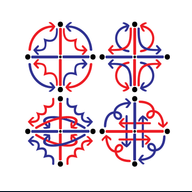
A prop-spinning path assembled from pieces of simpler patterns, looped forever.

A CAP is a cyclic path assembled in time from two or more elementary patterns, each used one or more times. One prop traces every fragment and returns to its starting point.
Damien coined the term and published the construction while posting as Zaltymbunk and French_Saltimbanque on Home of Poi in 2009.
Damien called the elementary families rosettes and cycloids. In standard curve language they belong to the centered trochoid family; his cycloid cases are the cusp-forming epicycloids or hypocycloids. The clean plots below are reconstructed from his published parameters.
The animated reference illustrations Damien linked were by Robert Ferréol, Encyclopédie des formes mathématiques remarquables. Those archival GIFs are credited here and not republished.
Rosettes share equal radii. Cycloids tune the radii until cusps appear.
These are the three composite plots Damien published in the 2009 framework.
An extension half-cycle joined to an antispin half-cycle.
1 0 ; 1 3/4 ; 1/2 & -1 4 ; 1 3/4 ; 1/2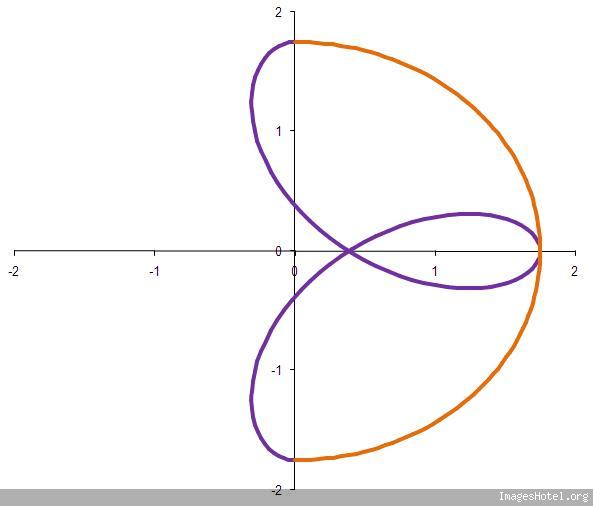
1 0 ; 1 3/4 ; 1/2 & -1 4 ; 1 3/4 ; 1/2 An extension half-cycle joined to an antispin half-cycle.
Alien Jon described the OMCC group pulling apart complex poi patterns with Noel, Greg, Jordan, and Zan. Damien joined them with his own CAP explorations.
In a Home of Poi thread about Yuta's spinning, Alien Jon wrote, “I got the term from Damien.” Damien then set out the O/M/E model, notation, feasibility rules, and worked CAP examples.
Drex documented the definition and C-CAP technique. Nick Woolsey taught Capped Antispin Patterns. Drex's eight-step lesson credited Charlie's 9-Square Theory.
The forum discussion survives, but old playlists and image hosts have disappeared. This exhibit keeps the mathematics readable while sending visitors back to the remaining originals.
Posting as Zaltymbunk and French_Saltimbanque
Coined Continuous Assembly Patterns and published the elementary curves, O/M/E notation, rosettes, cycloids, wrap fractions, feasibility rules, and composite examples shown on this page.
Carried Damien's term into wider use and framed CAPs as a way to think about movement rather than the name of one move.
Taught CAPs to a broad learner audience in 2016 and used the expansion “Capped Antispin Patterns.”
PlayPoi lessonDeveloped 9-Square Theory and the eight-step CAP approach credited in Drex's double staff lesson.
Eight-step lessonDocumented CAPs across the Tech Poi Blog, tutorials, and the preserved copy of Damien's mathematical framework.
C-CAP lessonAlso in the room at Burning Man 2007: Noel, Greg, Jordan, and Zan of the OMCC crew.
CAPs serially assemble elementary paths for one prop. Each hand's trajectory is defined independently, then two-hand movement can be overlaid.
Each TKA letter records both hands at one step. LOOP transformations combine those letters into speakable words that return to their start.
Both answer the desire for patterns that can repeat forever. They are parallel concepts, not parent and child. Neither contains the other.
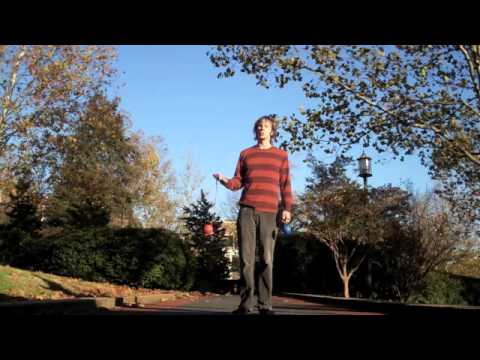
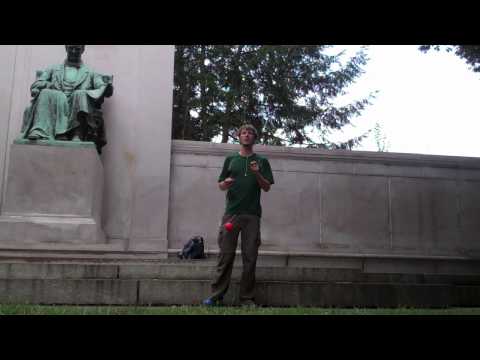
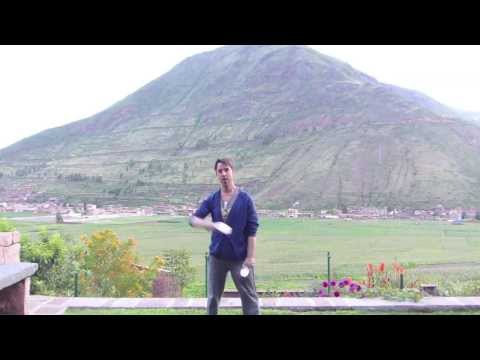
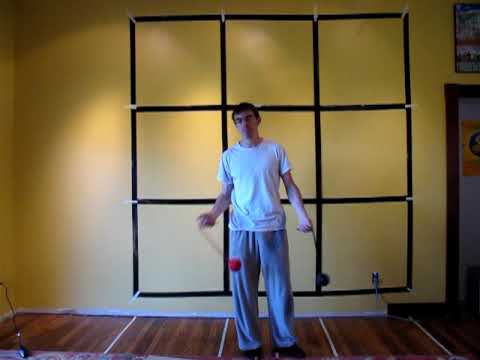
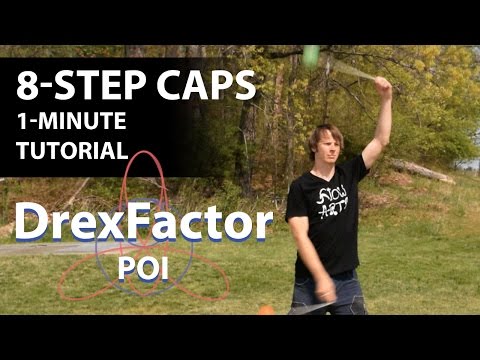
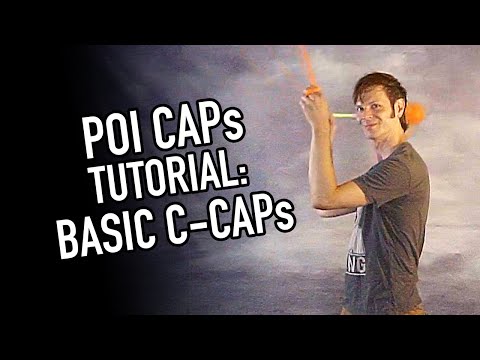
Charlie's series continues in the full 9-Square Theory playlist. Alien Jon's pattern playlist from the origin thread no longer resolves.
Home of Poi, ca. 2009. Coinage attribution, the OMCC account, Damien's framework, and the community debate.
Damien's model and notation, preserved by DrexFactor.
Robert Ferréol's mathematical curve encyclopedia supplied the animated illustrations Damien linked.
DrexFactor, 2012.
Nick Woolsey, PlayPoi, 2016.
A print-era CAP chapter referenced in the origin thread.
See how TKA turns complete two-hand steps into cycles through composable transformations.