Back

The Kinetic Alphabet

A notation system for flow arts

What Is The Kinetic Alphabet

The Kinetic Alphabet (TKA) is a notation system for flow arts. Other people have documented patterns before. The Kinetic Alphabet takes it further.

Right now, flow arts knowledge lives mostly in videos scattered across the internet. Sheet music tells musicians what to play. Scripts tell actors what to say. The Kinetic Alphabet does that for prop movement: write it down, read it back, reproduce it later.

How It Works

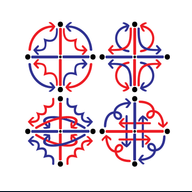
Each beat of movement gets a pictograph. It shows where your hands are and how they move on a grid. You can read it without memorizing terminology. Positions are simple: hands across from each other, at the same point, or at a right angle.

Alpha position: hands at opposite points on the grid
Alpha Opposite points
Beta position: hands at the same point on the grid
Beta Same point
Gamma position: hands forming a right angle on the grid
Gamma Right angle

Pictographs also capture motion type, direction, and rotation. Letters are optional but handy when you need to talk about a specific beat during rehearsal.

Why This Matters

Flow arts is young. Most spinners learn alone, develop their own vocabulary, and have a hard time collaborating with people who learned differently.

TKA uses symbols and pictures instead of English terminology, so it works across languages. It works on paper and on screen.

When patterns are written down, choreographers can share and build on each other's work. You can also archive your own material and actually find it again months later.

Who It's For

Teachers, choreographers, spinners. TKA is meant to make synchronized group choreography more realistic, but it's also useful for solo practice.

It tracks individual parts, which helps if you struggle with memory or executive function. The level system starts simple and gets denser, so you set your own pace.

If you care more about theatrical performance than technical patterns, that's fine. Learn the notation, then forget about it while you perform.

The Vision

If you teach, you can hand someone a pictograph instead of demonstrating the same thing over and over. Send notated sequences to students anywhere. No shared language required.

Once the system clicks, you start thinking in it. Make your own sequences. The letter system shows you what you've explored and what you haven't, so there's always something new to try.

The long-term goal is better collaboration and more ambitious group performances.

Frequently Asked Questions

What is The Kinetic Alphabet?

The Kinetic Alphabet (TKA) is a notation system for flow arts - like sheet music for dancers. It lets flow artists document, share, and learn staff, clubs, fans, hoops, buugeng, and sword choreography using pictographs and symbols.

What does TKA stand for?

TKA stands for The Kinetic Alphabet, a flow arts notation system for documenting and sharing staff, fans, hoop, club, and buugeng choreography.

What is flow arts notation?

Flow arts notation is a system for writing down prop manipulation movements like staff, fans, hoop, and club choreography. The Kinetic Alphabet uses pictographs to represent each beat of movement, showing hand positions, motion types, and prop orientation.

How do you write down staff spinning moves?

The Kinetic Alphabet uses pictographs that capture hand positions on a grid, motion types (prospin, antispin, static), direction, and number of turns. It's built for dual-wielded props like double staff, and the notation applies to any prop you grip directly.

What props does TKA Composer support?

TKA Composer is built for dual-wielded static props: staff, clubs, fans, hoops, mini hoops, buugeng, triads, and swords. Each prop is rendered with proper rotations and hand positions.

Can I use TKA notation for poi?

The Kinetic Alphabet is built for static props like staff and fans, where you can hold any orientation freely. Poi is momentum-based, so gravity limits which TKA sequences are physically possible. Many sequences work, but not all. The Poi Lab tool identifies which sequences are poi-legal.

Is TKA Composer free to use?

Yes, TKA Composer is completely free. You can create sequences, animate them, export to various formats, and browse the community library at no cost. The app is open and accessible to all flow artists.

How do I learn flow arts with The Kinetic Alphabet?

TKA Composer includes progressive lessons from grid basics to advanced LOOPs. Interactive quizzes help reinforce understanding, and the Train module offers daily challenges to track your progress.

Can I share my sequences with other flow artists?

Yes. Export sequences as PNG images, PDFs, animated GIFs, or videos. Share links directly to Instagram, or publish to the community gallery for other artists to find.

Ready to create?

TKA Composer is free to use. No download required.

Open TKA Composer

Created by Austen Cloud β€’ 2022–present